Train Feet and Ankles to Improve Brain Function Force Transfer and Movement Efficiency
Most strength and mobility problems do not start where they show up.
A tight hip, cranky knee, stiff low back, or weak squat may trace back to the first body part that touches the ground: the foot. The feet and ankles are not just passive bases of support. They are sensory organs, shock absorbers, springs, steering systems, and force transmitters.
Every step sends information up to the brain. Every stride asks the ankle to bend, stiffen, rotate, and rebound at the right time. When the feet and ankles do their job well, the rest of the body has a better chance to move with power and ease.
When they lose mobility, strength, or sensory clarity, the body finds another way. That other way is often called a compensation pattern.
This article is for education only and is not medical advice. Pain, nerve symptoms, injury, or major changes in movement should be assessed by a qualified health professional.
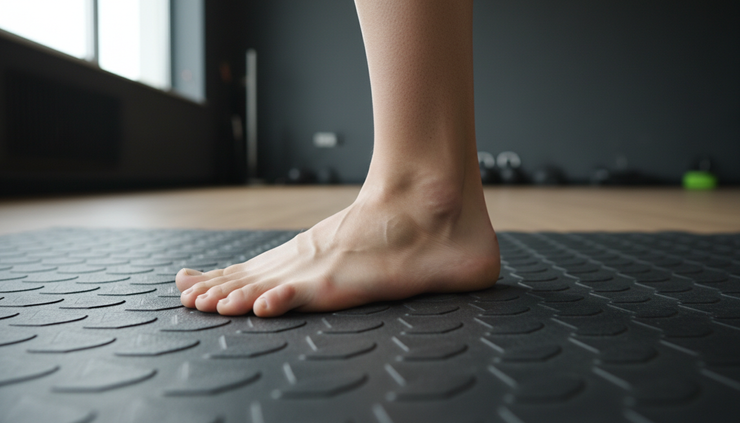
The feet are a major source of information for the brain
The brain controls movement based on the information it receives. It needs input from the eyes, inner ear, joints, skin, muscles, and fascia to decide how much force to produce and where to send it.
The feet play a huge role in that system.
They contain dense sensory receptors that detect:
Pressure
Stretch
Joint position
Vibration
Texture
Speed of movement
Changes in balance
This sensory information travels through the nervous system and helps the brain answer simple but vital questions.
Where am I in space?
Is the ground stable?
How much force do I need?
Can I produce power safely here?
Functional neurology approaches, including concepts taught through Z-Health Performance Systems, often place a strong focus on input before output. In simple terms, the nervous system tends to move better when it receives clear information. If the brain gets blurry or unreliable signals from the feet and ankles, it may reduce power, limit range of motion, increase tension, or alter coordination as a protective response.
That does not mean every issue is “in the feet.” It means the feet can be an important part of the movement equation.
A stiff ankle can change a squat. A collapsed arch can change hip rotation. A foot that cannot sense the ground well can change balance, gait, and force production.
Better input can lead to better output.
Foot and ankle training helps the brain trust movement
The brain is protective by design. If it does not trust a position, it usually limits access to that position.
This shows up in common ways:
A person cannot squat deeply without the heels lifting
Running feels heavy or loud
Single-leg balance feels shaky
The calves stay tight no matter how much stretching happens
The low back works too hard during lunges
The knees collapse inward under load
These are not always strength problems in the obvious sense. Sometimes they are coordination and threat problems. The nervous system may not feel safe producing force through a position it cannot sense or control.
Training the feet and ankles can improve local capacity, but it can also improve the brain’s map of the body.
This is often called body mapping in movement education. The idea is simple: the brain keeps a working map of every joint and body part. Clear maps tend to produce cleaner movement. Blurry maps often produce stiffness, guarding, or poor timing.
Foot and ankle drills can help sharpen that map.
Useful inputs include:
Toe movement in different directions
Ankle circles with control
Skin stimulation on the sole of the foot
Balance work
Loaded calf raises
Tibialis raises
Barefoot walking on safe surfaces
Slow gait drills
Controlled pronation and supination
The goal is not to make the foot “perfect.” The goal is to give the nervous system more options.
More options usually mean less compensation.
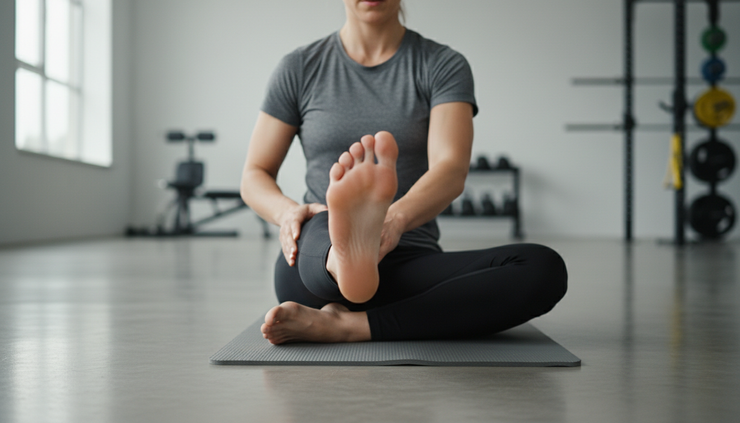
Force transfer starts at the ground
Movement begins with a conversation between the body and the ground.
When walking, running, jumping, lifting, or changing direction, the body pushes into the floor. The floor pushes back. That force travels through the feet, ankles, legs, pelvis, spine, and upper body.
This is ground force transfer.
If the foot cannot accept force well, the rest of the chain has to adapt. If the ankle cannot bend, rotate, or stiffen at the right moment, energy leaks. If the toes cannot extend, the body may lose a key part of its push-off mechanism.
Think about a sprint.
The foot strikes the ground. The arch loads. The ankle controls motion. The calf and Achilles store elastic energy. The hip extends. The trunk manages rotation. The opposite arm drives. The whole body participates.
A small breakdown at the foot can ripple upward.
That ripple may affect:
Knee tracking
Hip extension
Pelvic control
Trunk rotation
Shoulder mechanics
Breathing strategy
Neck tension
This is why foot and ankle training matters for more than rehab. It matters for strength, speed, balance, and efficient movement.
Good force transfer requires both mobility and stiffness. The ankle needs enough range to absorb force, but enough strength and timing to turn that force into motion.
Too much rigidity creates impact and poor shock absorption. Too much collapse creates instability and wasted energy.
Efficient movement lives between those extremes.
The back force transmission system connects foot pressure to whole-body power
The phrase back force transmission system is often used to describe how force travels through the posterior side of the body. This includes the feet, calves, hamstrings, glutes, sacrum, spinal fascia, back muscles, and even the neck and head position.
It is closely related to the posterior chain, but the word “transmission” matters. The body does not just produce force in isolated muscles. It transmits force through tissues, joints, and timing.
The plantar fascia under the foot connects mechanically with the Achilles tendon and calf complex. The calves connect functionally with the hamstrings. The hamstrings link to the pelvis. The pelvis connects to the thoracolumbar fascia, glutes, and spinal muscles.
When this back line works well, the body can create strong extension patterns.
That matters for:
Running
Jumping
Deadlifting
Throwing
Climbing stairs
Standing posture
Walking with a strong stride
The foot is the starting point for much of this force.
During push-off, the big toe extends, the arch stiffens, and the ankle plantarflexes. This helps convert stored energy into forward motion. If the big toe is stiff, the arch cannot load well, or the calf is weak, the body may borrow motion from the knee, hip, or low back.
That borrowed motion can work for a while. Over time, it may reduce strength, limit mobility, or make movement feel less smooth.

Fascial slings help transfer energy across the body
The body uses fascial slings to connect movement from one region to another. Fascia is connective tissue that surrounds and links muscles, bones, nerves, and organs. It helps distribute tension and supports coordinated motion.
Several slings are especially important for gait and athletic movement.
The posterior oblique sling supports rotation and extension
This sling connects the gluteus maximus on one side with the opposite latissimus dorsi through the thoracolumbar fascia.
It is active during walking, running, throwing, and many lifting patterns. When the right leg drives back, the left arm often drives back too. That cross-body pattern helps transfer force through the pelvis and trunk.
If the foot cannot push off well, the glute may not receive or produce force at the right time. The low back may then try to create the missing extension or rotation.
The anterior oblique sling supports diagonal control
This sling connects the external obliques, internal obliques, adductors, and abdominal fascia across the front of the body.
It helps with rotation, cutting, kicking, walking, and bracing. When the foot contacts the ground, the body uses diagonal control to manage forces that travel up and across the pelvis.
Poor foot control can make this sling work harder than it should. For example, if the arch collapses quickly and the knee dives inward, the pelvis and trunk must react to manage that inward force.
The lateral sling supports single-leg stability
This sling includes the glute medius, adductors, and lateral trunk structures. It helps keep the pelvis level when standing on one leg.
Every step is a single-leg stance. Running is a series of single-leg landings. If the foot and ankle wobble, the lateral hip and trunk must work harder to keep the body upright.
This is one reason ankle training can improve hip control. The hip may be strong in a gym test, but if the foot gives poor information or poor support, that strength may not show up during movement.
Compensation patterns reduce strength, mobility, and energy transfer
A compensation pattern is the body’s workaround. It is not always bad. Compensation helps people keep moving when something is limited, painful, weak, or unfamiliar.
The problem comes when the workaround becomes the default.
If the ankle lacks dorsiflexion, the foot may turn out during squats. If the big toe cannot extend, the body may shorten the stride. If the arch cannot control pronation, the knee may drift inward. If the foot cannot sense pressure well, the body may increase tension up the chain.
Common signs of foot and ankle compensation include:
Toes gripping the floor during balance drills
Heels lifting early during squats
Feet turning out during lunges
Knees collapsing inward
Calves always feeling tight
One foot feeling less stable than the other
Uneven shoe wear
Low back fatigue during lower-body training
These patterns can affect performance because they change timing.
Strength is not just how much force a muscle can create. It is also whether that force appears at the right time, in the right direction, with the right amount of stiffness.
Mobility works the same way. A joint may appear tight because the tissue is short, but it may also appear tight because the nervous system does not trust the position.
That is why forcing range of motion does not always solve the problem. Sometimes the better path is to improve sensory input, joint control, and strength in the new range.
What foot and ankle training should include
Good training covers sensation, mobility, strength, balance, and integration. Each piece supports the others.
Start with sensory input
Before loading the system, improve awareness.
Try simple drills like:
Rolling the sole of the foot on a soft ball
Lightly brushing or tapping the bottom of the foot
Standing on different safe textures
Noticing pressure under the heel, big toe, and little toe
Practicing slow weight shifts
These drills are common in functional neurology inspired training because they give the brain clearer input from the foot.
The goal is not pain. Keep the input comfortable and specific.
Restore ankle and toe motion
The ankle needs dorsiflexion, plantarflexion, inversion, eversion, and rotation. The toes need the ability to spread, flex, and extend.
Useful drills include:
Controlled ankle circles
Knee-to-wall ankle rocks
Toe lifts
Big toe extension practice
Toe spreading
Short foot drills
Heel raises through full range
Move slowly enough to notice what is happening. Speed can hide poor control.
Build strength where force enters the body
Foot and ankle strength should include both endurance and power.
Good options include:
Standing calf raises
Seated calf raises
Tibialis raises
Single-leg balance reaches
Farmer carries
Sled pushes
Step-downs
Hops and pogo jumps, when ready
Calf training deserves special attention. The calf and Achilles complex plays a major role in walking, running, jumping, and absorbing impact. Weakness here can make movement feel heavy and inefficient.
Integrate the foot with the whole body
Isolated drills are useful, but they must connect to bigger patterns.
After foot and ankle work, practice movements like:
Squats
Lunges
Step-ups
Deadlifts
Loaded carries
Walking drills
Running mechanics
Rotational medicine ball throws
Pay attention to how force travels. Can the foot stay connected to the ground without gripping? Can the ankle move without collapsing? Can the hip produce force without the low back taking over?
This is where the nervous system learns that the new input matters.

A simple foot and ankle routine to try
This short sequence can fit into a warm-up. Keep it pain-free and controlled.
Foot sensory work
Roll the sole of each foot on a soft ball for 30 to 60 seconds. Use light to moderate pressure.
Toe control
Lift the big toe while the other toes stay down. Then keep the big toe down and lift the other toes. Do 5 to 8 slow reps each way.
Ankle circles
Move each ankle through the largest smooth circle you can control. Do 5 reps per direction.
Knee-to-wall rocks
Place one foot a few inches from a wall. Drive the knee toward the wall while the heel stays down. Do 8 to 10 reps each side.
Calf raises
Rise slowly, pause at the top, lower with control. Do 8 to 15 reps.
Single-leg balance
Stand on one foot and breathe calmly. Keep the toes relaxed. Hold for 20 to 30 seconds each side.
Integrated pattern
Perform a few slow squats, lunges, or step-ups. Notice whether the movement feels smoother.
This routine is not a cure-all. It is a starting point. The best drills depend on the person, the sport, the injury history, and the movement goal.
Better feet create better movement choices
Train Feet and Ankles to Improve Brain Function Force Transfer and Movement Efficiency is more than a catchy idea. It describes a real movement principle: the body depends on accurate information and clean force transfer.
The feet tell the brain where the body is. The ankles shape how force enters and leaves the body. The fascial slings distribute that force across the pelvis, spine, and shoulders. The back force transmission system helps turn ground contact into extension, speed, and power.
When the feet and ankles lack strength, mobility, or sensory clarity, the body compensates. Those compensations can change how strength shows up, how mobility feels, and how much energy gets lost between the ground and the rest of the body.
Start small. Train the toes. Move the ankles. Strengthen the calves. Improve balance. Then connect it all to squats, walking, running, lifting, and sport.
The feet are not just the bottom of the body. They are the beginning of the chain.


Comments